Mail Us:Landrolab@gmail.com


What Is a Full Steel Laboratory Bench?
A full steel laboratory bench is a workstation constructed entirely from cold-rolled steel, including its frame, cabinets, drawers, and support structure. After fabrication, all steel components are coated with epoxy powder to improve resistance to corrosion, moisture, and daily wear.
Because of its high strength and durability, a full steel laboratory bench is widely used in pharmaceutical laboratories, research institutes, hospitals, and chemical testing facilities. It is designed to support heavy laboratory equipment while maintaining long-term stability under demanding working conditions.
Compared with mixed-material furniture, full steel laboratory benches require less maintenance and generally offer a service life of more than 20 years, making them a reliable choice for laboratories that prioritize long-term performance.
Key Features
- Heavy-duty cold-rolled steel construction
- Electrostatic epoxy powder coating
- Excellent corrosion resistance
- High load-bearing capacity
- Fire-resistant structure
- Easy cleaning and maintenance

Typical Applications
Full steel laboratory benches are recommended for laboratories where durability and chemical resistance are critical. They are commonly installed in pharmaceutical manufacturing facilities, biotechnology laboratories, chemical research centers, hospitals, university research laboratories, environmental testing laboratories, food inspection laboratories, and government institutions.
These environments frequently involve corrosive chemicals, precision analytical instruments, and continuous daily operation. The robust steel structure ensures that laboratory furniture remains stable even under demanding working conditions while minimizing maintenance requirements throughout its service life.
Expert Tip
If your laboratory handles corrosive chemicals daily or plans to operate for more than ten years without major renovation, investing in a full steel laboratory bench usually provides the lowest total ownership cost despite its higher initial purchase price.
What Is a Steel Wood Laboratory Bench?
A steel wood laboratory bench combines a powder-coated steel frame with moisture-resistant wooden cabinets. This design reduces manufacturing costs while maintaining sufficient strength for most routine laboratory activities.
Steel wood laboratory benches are commonly installed in schools, universities, food laboratories, quality control laboratories, and environmental testing facilities where chemical exposure is relatively limited.
Although the wooden cabinets require more attention in humid or highly corrosive environments, they provide an attractive appearance, flexible storage options, and a lower initial investment. For many laboratories, this balance between performance and cost makes steel wood laboratory benches an excellent solution.
Key Features
- Strong cold-rolled steel supporting frame
- Moisture-resistant wooden cabinets
- Lower initial investment
- Flexible storage configuration
- Easy installation and replacement
- Compatible with multiple countertop materials
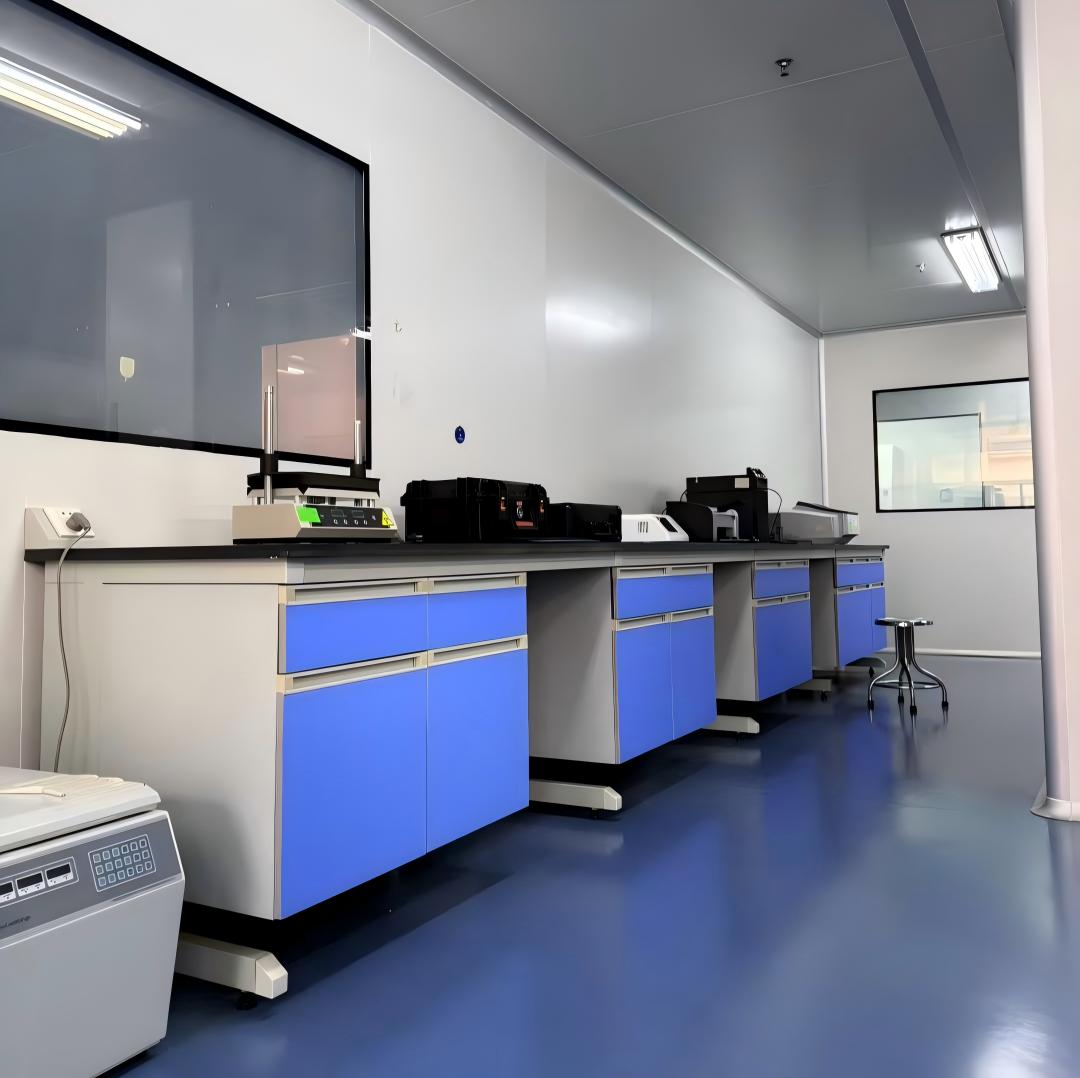
Typical Applications
Steel wood laboratory benches are commonly used in universities, colleges, vocational schools, food laboratories, environmental laboratories, quality control laboratories, water testing laboratories, agricultural research centers, and general industrial laboratories.
These laboratories typically work with mild chemicals and medium-weight analytical equipment, making steel wood laboratory benches a practical and economical solution. Their modular cabinet design also allows laboratories to expand or reconfigure workstations as research requirements evolve.
Expert Tip
If your laboratory focuses on education, routine testing, or quality inspection with limited exposure to highly corrosive chemicals, a steel wood laboratory bench often delivers the best balance between performance, appearance, and budget.
Key Differences Between full steel vs steel wood laboratory bench
At first glance, both laboratory bench types appear to offer similar functionality. However, their differences become much more apparent when evaluating long-term performance, maintenance requirements, chemical resistance, and overall lifecycle costs.
A full steel laboratory bench is engineered for demanding laboratory environments where durability, safety, and longevity are top priorities. Its all-steel construction provides superior resistance to moisture, corrosion, fire, and heavy mechanical loads, making it the preferred choice for pharmaceutical manufacturing, chemical research, and high-level scientific laboratories.
By contrast, a steel wood laboratory bench is designed to provide reliable daily performance at a more economical price. The combination of a steel frame and wooden cabinetry reduces manufacturing costs while still maintaining sufficient structural strength for most educational and routine laboratory applications.
For project managers, the decision is rarely about which option is "better." Instead, it depends on laboratory function, operating environment, maintenance expectations, and available budget. Understanding these differences before purchasing laboratory furniture can significantly reduce future maintenance expenses and improve laboratory efficiency.
When selecting laboratory furniture, it is also advisable to consider industry standards published by SEFA (Scientific Equipment and Furniture Association) to ensure safety, durability, and long-term performance.