Laboratory Bench Guide

Laboratory Bench Dimensions: Standard Sizes & Planning Guide

Choosing the correct laboratory bench dimensions is essential for creating an efficient, safe, and comfortable laboratory. This guide explains standard laboratory bench sizes, recommended heights, aisle clearances, and planning tips to help you design the ideal laboratory workspace.

Introduction

Selecting the correct laboratory bench dimensions is one of the most important decisions during laboratory planning. Bench size directly affects workflow efficiency, equipment placement, operator comfort, and future expansion. A bench that is too narrow limits usable workspace, while one that is too deep or improperly positioned can reduce accessibility and create safety risks.

Whether you are designing a pharmaceutical laboratory, university laboratory, testing facility, or research center, understanding standard laboratory bench dimensions helps maximize available space while ensuring compliance with laboratory design principles. This guide explains the recommended laboratory bench sizes, heights, depths, and aisle clearances to help you create an efficient laboratory layout.

Quick Answer

The standard laboratory bench height is typically 850–900 mm (33–36 inches), with a bench depth of 750 mm (30 inches) for wall benches and 1500 mm (60 inches) for island benches. Aisles should generally be at least 1200–1500 mm (48–60 inches) wide to allow safe movement and equipment operation.

What Are Standard Laboratory Bench Dimensions?

Although every laboratory has unique requirements, most laboratory furniture manufacturers follow a set of standard dimensions that have been proven through years of practical application. These dimensions provide a balance between ergonomics, available workspace, and laboratory safety.

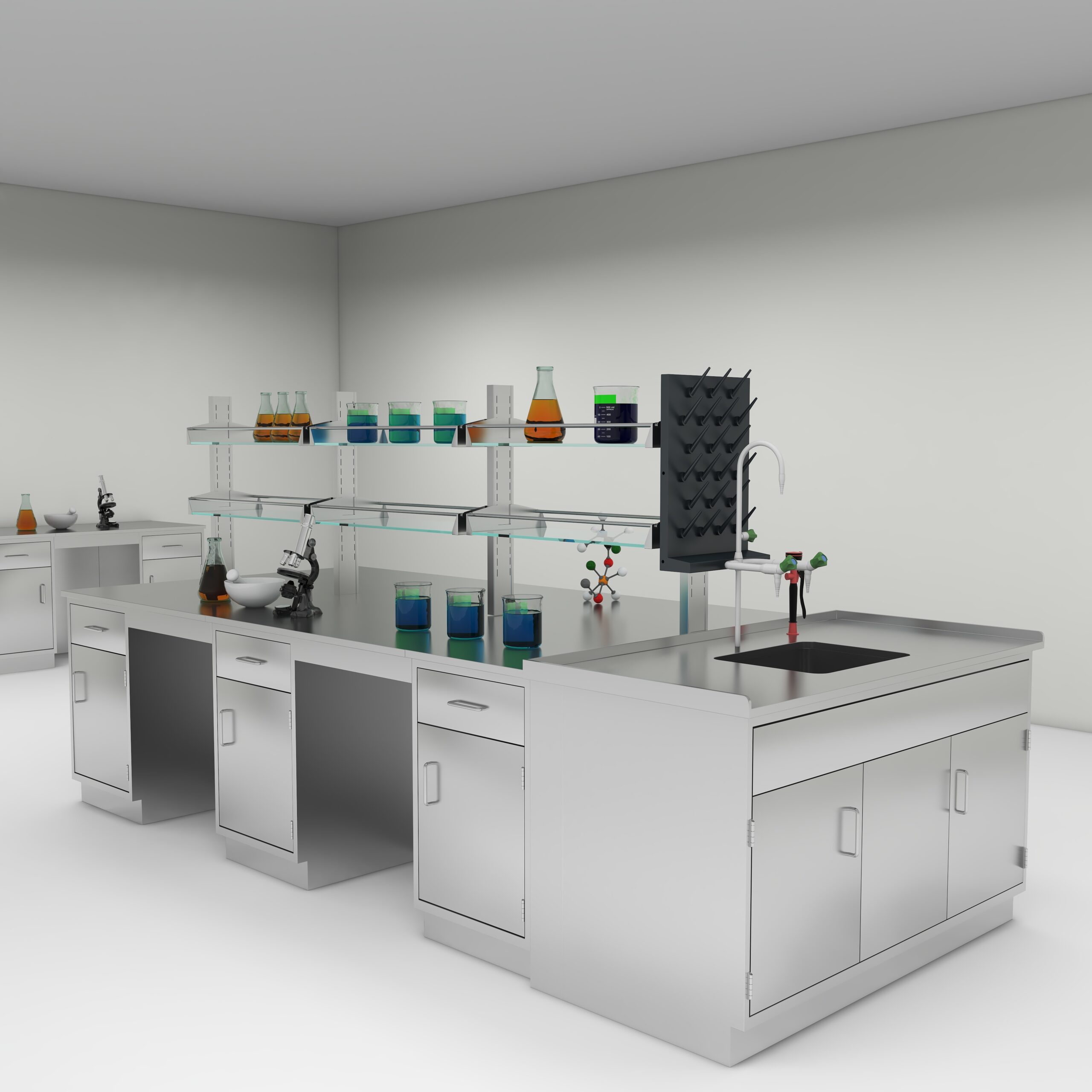
For wall laboratory benches, the most common depth is 750 mm (30 inches). This provides sufficient space for analytical instruments, small equipment, and routine laboratory work while allowing users to comfortably reach the back of the work surface.

Island laboratory benches are generally much wider, with a standard depth of 1500 mm (60 inches). This allows researchers to work on both sides simultaneously while sharing utilities such as power outlets, gas valves, and reagent racks.

Laboratory bench length is highly flexible. Standard modules usually range from 1200 mm to 3000 mm, allowing laboratories to combine multiple sections into longer continuous workstations according to project requirements.
Recommended Laboratory Bench Height

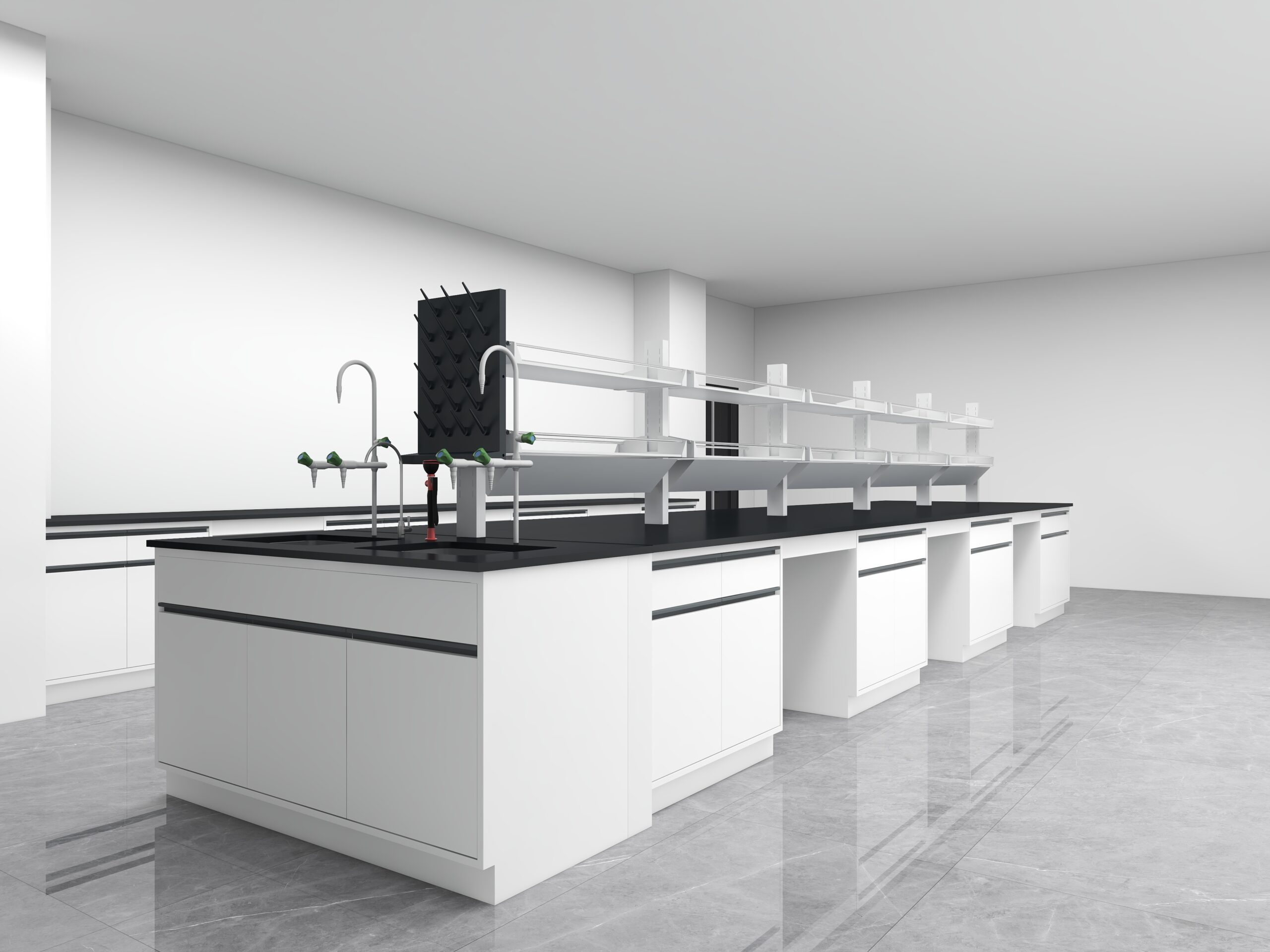
Bench height has a direct impact on user comfort and productivity. A workstation that is too low may cause operators to bend forward for extended periods, while one that is too high can increase shoulder and arm fatigue during precise laboratory procedures.

For standing laboratories, the industry standard bench height is 850–900 mm (33–36 inches). This height accommodates most users while providing comfortable operation for common laboratory equipment.

Certain laboratories may require customized heights depending on their workflow. Instrument benches that support heavy analytical equipment are often designed slightly lower to improve stability, while cleanroom laboratories sometimes use specialized heights to match process requirements.

For laboratories that perform extended seated work, adjustable laboratory benches or dedicated seated workstations can significantly improve operator comfort and reduce long-term ergonomic strain.

Laboratory Aisle Clearance and Workspace Planning

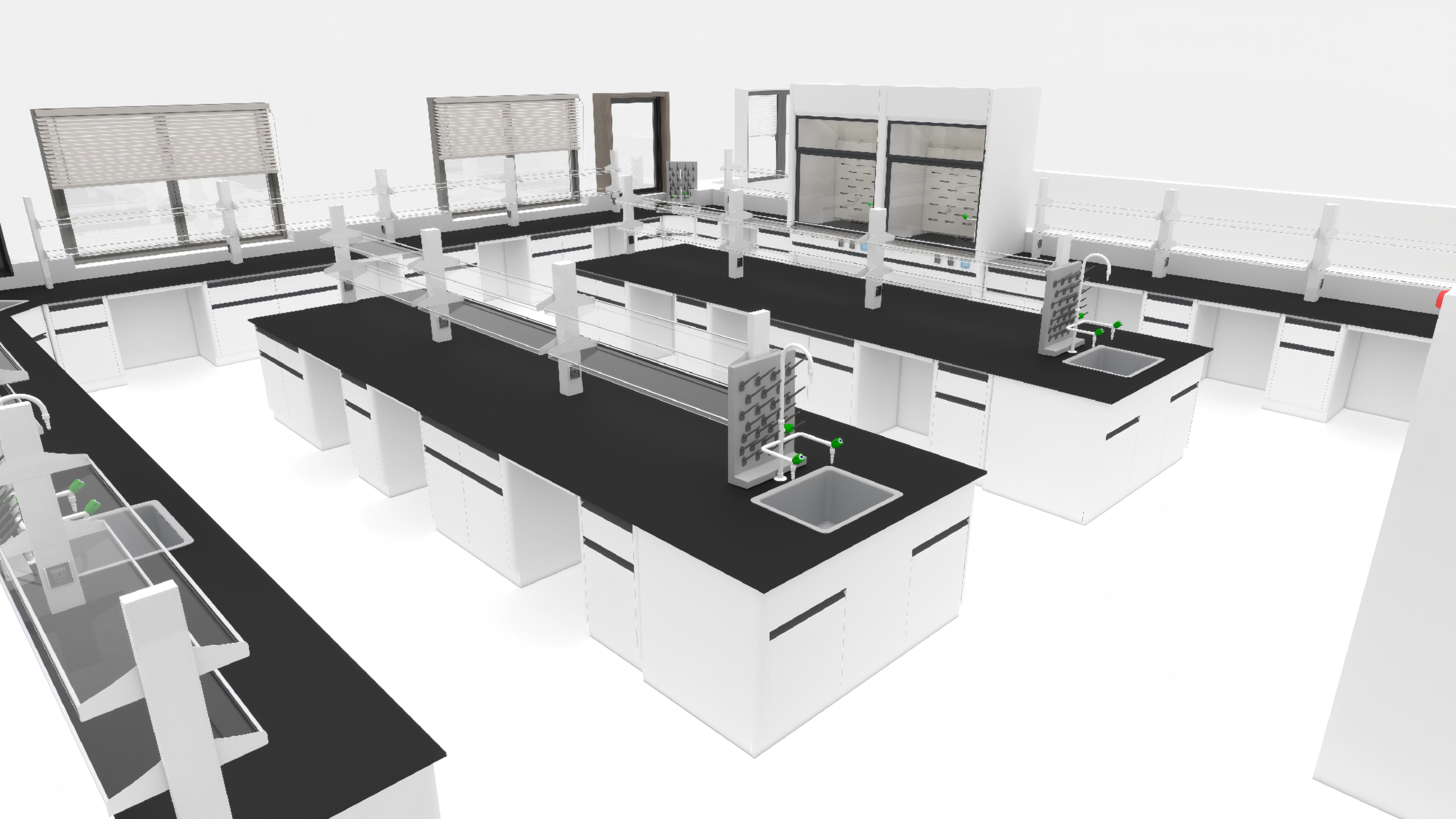
Choosing the correct laboratory bench dimensions is only part of the planning process. Adequate aisle space between benches is equally important for ensuring safe movement, equipment transportation, and emergency access.

Most laboratory designers recommend maintaining a minimum aisle width of 1200 mm (48 inches) for standard laboratories. Laboratories with larger analytical instruments or higher personnel traffic may increase aisle widths to 1500 mm (60 inches) or more.

Proper spacing also allows cabinet doors and drawers to open fully without obstructing adjacent workstations. During the planning stage, designers should consider equipment dimensions, operator movement, and future expansion to avoid costly layout modifications after installation.

A well-designed laboratory layout not only improves efficiency but also creates a safer working environment for laboratory personnel.

How to Choose the Right Laboratory Bench Dimensions

There is no single laboratory bench size suitable for every project. The optimal dimensions depend on laboratory function, available floor space, equipment requirements, and future development plans.

Research laboratories often require larger work surfaces to accommodate sophisticated analytical instruments and multiple operators. Educational laboratories, on the other hand, usually prioritize flexible layouts that maximize student seating while maintaining safe working distances.

Before selecting laboratory furniture, project managers should evaluate the available installation area, utility locations, instrument sizes, storage requirements, and expected workflow. Working with an experienced laboratory furniture manufacturer can help optimize laboratory space while reducing unnecessary construction costs.

For laboratories planning long-term operation, selecting modular laboratory bench systems also provides greater flexibility for future expansion and equipment upgrades.

Typical Applications

Laboratory bench dimensions should always be selected according to the intended laboratory application rather than following a one-size-fits-all standard. Different industries require different workspace configurations to accommodate equipment, personnel, and operational procedures.

For educational laboratories, modular benches with standard dimensions provide flexibility for future expansion and classroom reconfiguration. Pharmaceutical and research laboratories often require larger island benches to support advanced analytical instruments and collaborative workflows. Quality control laboratories typically benefit from compact layouts that maximize efficiency while maintaining adequate aisle clearance for safe movement.

Expert Tip

Avoid selecting laboratory bench dimensions based solely on available room size. Instead, determine the placement of major laboratory equipment first, then design bench dimensions and aisle spacing around the workflow. This approach creates a more efficient laboratory layout and minimizes costly modifications in the future.

When planning laboratory layouts, designers should also consider recommendations from ASHRAE regarding laboratory ventilation, occupancy, and safe workspace design to improve overall laboratory performance.

Frequently Asked Questions

Which laboratory bench lasts longer?

Full steel laboratory benches generally have a longer service life because they offer superior resistance to corrosion, moisture, and heavy daily use.

Is a steel wood laboratory bench suitable for chemical laboratories?

Yes. It is suitable for general chemical laboratories with moderate chemical exposure, but highly corrosive environments usually require full steel furniture.

Which laboratory bench is easier to maintain?

Full steel laboratory benches require less maintenance because their epoxy-coated steel surfaces are easy to clean and highly durable.

Can both laboratory benches use the same countertop?

Yes. Both systems can be fitted with epoxy resin, phenolic resin, ceramic, stainless steel, or PP countertops depending on laboratory requirements.

Which option is more cost-effective?

Steel wood laboratory benches have a lower initial purchase cost, while full steel laboratory benches often provide a lower total cost of ownership over their longer service life.

READY TO PLAN YOUR LAB?

Partner with Landro’s engineering team to build a safe, efficient, and fully compliant research environment.

  • Free Consultation — Discuss your workflow and spatial constraints with experts.
  • Compliance Assured — Standardized designs passing SEFA & ASHRAE audits.
  • 3D Concept Preview — Visualize your laboratory before committing to construction.

Leave a Reply

Your email address will not be published. Required fields are marked *